
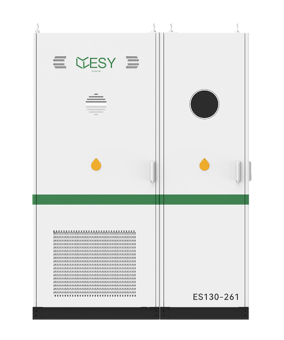
A 5kW solar inverter for home battery integration should match the battery voltage, charging rate, PV input range, and backup requirements of the household. Most residential 5kW hybrid inverters support 96–98% peak efficiency, 5–10kWh lithium battery systems, and PV arrays between 6kW and 8kW DC. The right combination improves solar self-consumption, reduces grid dependence, and allows better use of stored energy during high-price periods or outages.
A 5kW hybrid inverter is commonly selected for residential solar-plus-storage systems because it fits the electricity demand of many homes while keeping equipment size practical.
A typical household installation may include a 5kW inverter, a 6–15kWh LiFePO4 battery, and a 5–8kW rooftop solar array.
In markets such as Europe, Australia, and North America, residential solar systems installed after 2020 increasingly combine PV generation with battery storage instead of using solar panels alone.
The inverter is no longer only a device that converts DC power from solar panels into AC electricity.
It manages battery charging, grid interaction, backup power, and communication with smart energy devices.
A 5kW inverter with a suitable battery system can increase household solar self-consumption from around 30–40% without storage to approximately 70–90% when battery capacity matches daily electricity use.
The first comparison point between different 5kW solar inverters is the relationship between solar input capacity and inverter output.
Most manufacturers allow DC oversizing because solar panels rarely operate at their rated output throughout the entire day.
For example, a 5kW inverter may support 7kW or 8kW of PV input, creating a DC/AC ratio between 1.3 and 1.6.
A higher DC input allows the system to produce more electricity during mornings, evenings, and cloudy periods.
A 2023 residential PV analysis showed that systems with moderate oversizing could increase annual energy production by around 5–15% compared with systems using a 1:1 PV-to-inverter ratio.
However, excessive oversizing may increase energy clipping during strong sunlight hours.
A balanced design usually considers local solar radiation, roof direction, electricity consumption patterns, and battery charging speed.
The PV input capacity directly affects battery charging performance because additional solar generation must either be stored, exported, or reduced.
Battery compatibility is another major difference among 5kW solar inverters.
Residential batteries usually use either low-voltage or high-voltage designs.
Low-voltage batteries commonly operate around 48V, while high-voltage systems may operate between 100V and 500V DC.
The difference affects current levels, cable size, and system efficiency.
For a 5kW output:
| Battery Voltage | Approximate DC Current |
|---|---|
| 48V battery | About 100A |
| 200V battery | About 25A |
| 400V battery | About 12–13A |
Higher voltage battery systems reduce current requirements and can improve installation flexibility.
Many residential systems released after 2022 use high-voltage batteries because they allow easier expansion from 10kWh to more than 20kWh.
Battery communication is also important.
A compatible inverter should communicate with the battery management system through CAN, RS485, or Modbus.
The inverter needs battery information such as:
-
State of charge
-
Maximum charging current
-
Maximum discharge current
-
Temperature protection limits
-
Fault information
Without proper communication, the inverter may not control charging and discharging correctly.
Products such as ESYsunhome 5kW ESS combine inverter and energy storage functions into a residential system design, reducing compatibility issues between separate components.
Efficiency differences between 5kW inverters appear small but affect long-term electricity usage.
Most modern residential hybrid inverters reach peak efficiency between 96% and 98%.
For a household generating 20kWh of solar electricity per day:
-
A 98% efficient inverter loses about 0.4kWh.
-
A 96% efficient inverter loses about 0.8kWh.
The difference is approximately 146kWh per year if the system operates every day.
Battery charging and discharging also influence total system efficiency.
A complete solar-storage system usually has:
| System Process | Typical Efficiency |
|---|---|
| Solar DC to AC conversion | 96–98% |
| Battery charging | 94–98% |
| Battery discharge | 94–98% |
| Full round-trip efficiency | 85–95% |
A higher efficiency system provides better electricity usage over a 10-year battery lifespan.
Backup power capability separates standard grid-connected inverters from battery-ready hybrid models.
A traditional solar inverter normally shuts down when the grid fails because of anti-islanding requirements.
A hybrid inverter can continue supplying selected household loads when connected to a battery.
Backup performance depends on both inverter output power and battery size.
For example:
A 5kWh battery with a 5kW inverter can theoretically provide:
| Load Level | Approximate Backup Time |
|---|---|
| 500W essential loads | 8–10 hours |
| 1kW household loads | 4–5 hours |
| 3kW higher consumption | Around 1 hour |
A 10–15kWh battery provides longer backup operation and is more suitable for homes with frequent outages.
Many households choose backup circuits instead of powering every appliance.
Typical backup loads include refrigerators, internet equipment, lighting, security systems, and communication devices.
Smart energy management functions have become standard features in many residential 5kW hybrid inverters.
Modern systems can adjust battery operation according to electricity prices, solar production, and household consumption.
Time-of-use electricity plans are available in many regions, allowing users to charge batteries when electricity prices are lower and discharge them during expensive periods.
For example:
-
Night electricity price: $0.12/kWh
-
Evening peak price: $0.35/kWh
The price difference reaches $0.23/kWh before considering system losses.
With a 10kWh battery and 90% round-trip efficiency, approximately 9kWh can be used after storage losses.
Energy management software can also control export limits.
Some regions require homes to limit electricity sent back to the grid.
Functions such as zero-export control use smart meters to adjust inverter output and match household consumption.
The installation environment also affects inverter selection.
Indoor and outdoor installations require different protection levels.
Many residential inverters provide IP65 protection, allowing outdoor installation with resistance to dust and water exposure.
Temperature range is another factor.
A typical inverter operates between -20°C and 50°C, but continuous operation at high temperatures may reduce output power.
Good ventilation and correct installation location help maintain stable performance.
Single-phase and three-phase configurations should also be considered.
A 5kW single-phase inverter is suitable for many standard homes.
Three-phase systems are more common in larger houses with higher electrical demand.
Applications such as:
-
Heat pumps
-
Large EV chargers
-
Workshop equipment
-
Electric heating systems
may require better phase balance.
In 2024, residential EV charging installations increased in many countries, creating higher demand for solar-storage systems that can coordinate battery use and vehicle charging.
A suitable 5kW inverter selection depends on several household factors.
| Household Requirement | Suitable Feature |
|---|---|
| Daily solar storage | High battery compatibility |
| Frequent outages | Backup output support |
| Future battery expansion | Scalable voltage platform |
| Variable electricity prices | Smart scheduling |
| High electricity consumption | Larger battery capacity |
For many homes, a practical configuration includes:
-
5kW hybrid inverter
-
6–15kWh lithium battery
-
6–8kW solar array
-
Smart meter integration
A well-matched system can provide higher solar usage, better backup performance, and stable operation throughout the battery service period.
When comparing 5kW solar inverters, specifications such as PV input range, battery communication, efficiency, backup capability, and expansion options should be evaluated together rather than focusing only on inverter power rating.